THE MOON and MANIFESTATION
“The Moon is waxing — I unfold.
The Moon is waning — I retreat.”
It sounds like a forgotten rhyme from an ancient tale, yet it captures—simply and truthfully—the rhythm of our relationship with the Moon.
The Moon is the cosmic mother, the divine feminine that receives. She is Shakti—the principle that transforms the solar spark into material form. One of her most magnificent manifestations is Mother Nature herself.
Plants, oceans, tides, and all of life move in harmony with the Moon’s sacred cycles.
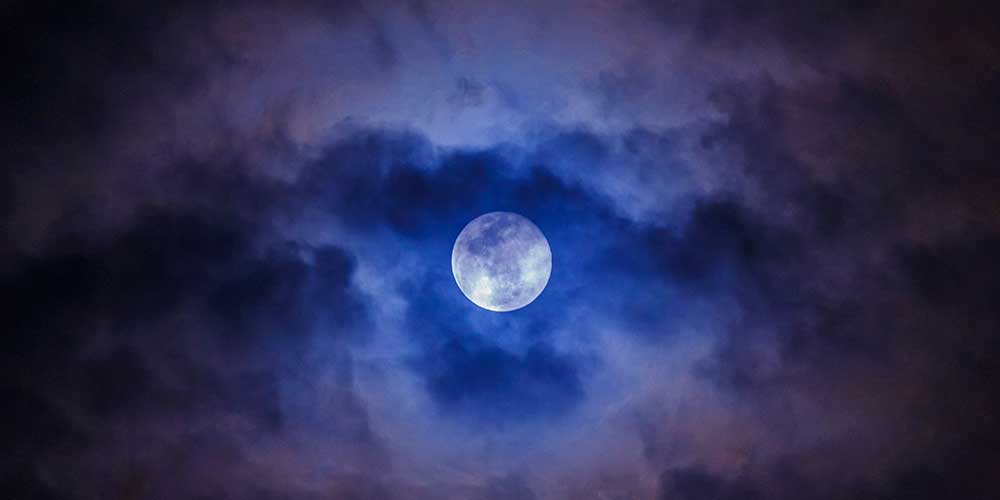
Among all celestial bodies in our solar system, the Moon moves fastest across the sky. This makes her a powerful influence in the unfolding of earthly experiences—especially during the Full Moon, when her light unveils what lies hidden.
In Vedic Astrology, the Moon aligns each day with a different star cluster called Nakshatras—27 in total. This means the Moon takes on a new quality every single day, journeying through a constantly shifting field of energetic landscapes.
In our personal birth charts, the Moon holds a special place. In Vedic Astrology, chart readings often begin from the house the Moon occupies—considered a second “ascendant.” From here, we trace how we emotionally experience life events, how we think, and how we feel.
Our mental and emotional realms are stirred and shaped by the Moon.
The Moon’s placement and strength in the chart reveal our relationship with the mother—and it’s fascinating to observe this even among siblings. Though they share the same mother, children with Moons in different positions often experience her in entirely different ways.
This alone offers profound insight into the psyche—into the hidden architecture of our inner world.
The Moon also governs our capacity to receive and give—and more precisely, to receive in balance.
If we struggle with receiving, we will also struggle with giving. Though the Moon represents nurturing and the feminine, it is also deeply tied to equilibrium.
People with challenging Moon placements often carry unresolved mother dynamics, difficulties with nourishment, or blocks around providing themselves with what they truly need.
One of the most intense arenas for this dynamic to play out is in relationships. Romantic connections, especially, act as mirrors. Just as the Moon reflects the Sun’s light, so do our partners reflect aspects of ourselves.
Relationships become sacred spaces where we continually forget—and remember—that there is no “other.” In this way, the Moon leads us deep into matter, only to awaken our longing for the source.
And here we arrive at manifestation—which inevitably brings us to karma.
The Sanskrit word karma means “action.” Through the cycles of action and reaction, karma is born and karma is transformed. Every action either generates new karma or burns old imprints.
And how is karma activated?
Through emotion. Through feeling.
So, working with the Moon is the art of allowing yourself to feel—without becoming what you feel.
To think—without believing you are your thoughts.
In Vedic Astrology, the Moon’s shadows are represented by the lunar nodes:
- Ketu (South Node) – the karmic past, subconscious patterns, spiritual detachment
- Rahu (North Node) – future evolution, desire, worldly attachments
These two always sit opposite each other in the chart, forming an axis of transformation—pulling us between what we’ve been and what we’re becoming, in search of completion.
The Moon’s symbol is a crescent—which simultaneously represents three phases: The first quarter, the last quarter, and the final stage of a Lunar Eclipse. This shape whispers of her changeable nature, and of her role in the psycho-physiological evolution of humankind.
While the Moon co-rules the third eye with the Sun, her exaltation takes place in the Heart Chakra (Anahata)—the fourth energy center.
This means that the spiritual knowledge we receive through the mind and emotions must be anchored in the heart to be fully manifested.
And this is the great work:
To relate to the world through the principle of love.
In essence, the Moon speaks to us of change and the impermanence of matter.
To truly hear her story, we must journey deep into the psyche.
And that journey will inevitably lead us to the Source—illuminating every shadow self along the way.
Lorem fistrum por la gloria de mi madre esse jarl aliqua llevame al sircoo. De la pradera ullamco qué dise usteer está la cosa muy malar.
Lorem fistrum por la gloria de mi madre esse jarl aliqua llevame al sircoo. De la pradera ullamco qué dise usteer está la cosa muy malar.